

Richard Liu and German Larrea operate in different industries: Liu founded China’s JD.com, while Larrea leads Mexico’s Grupo México. The official records reviewed do not establish a direct partnership or rivalry between them. Their careers offer a useful comparison of online retail, mining, transportation, and business control.
Richard Liu’s role at JD
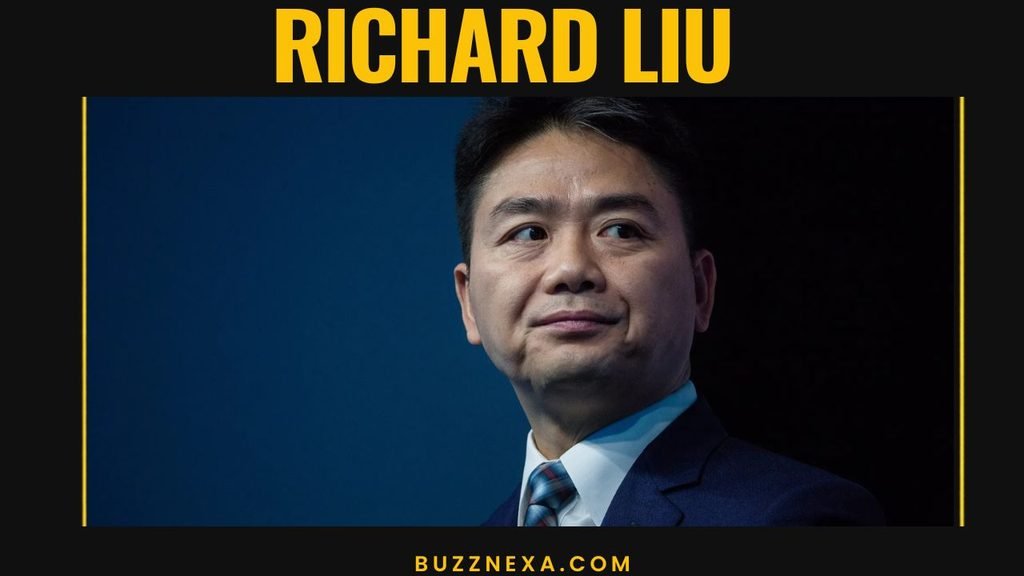
Richard Liu, also known as Liu Qiangdong, founded JD.com in 2004. His official company biography identifies him as founder and chairman and states that he served as CEO until April 2022.
Leaving the CEO position did not remove him from the company’s leadership. His continuing chairmanship makes it inaccurate to describe him as having retired from JD.
Liu earned a sociology degree from Renmin University of China in 1996 and an executive MBA from China Europe International Business School in 2011. These are documented qualifications, although they do not prove how he approached particular decisions.
His responsibilities also include chairmanships at JD Health and JD Logistics. Consequently, his influence extends across businesses serving different parts of the group’s operations.
Germán Larrea’s industrial career
Germán Larrea Mota-Velasco has served as Grupo México’s chairman, president, and CEO since 1994, according to Southern Copper’s executive biography. He joined Grupo México’s board in 1981 and previously held the executive vice chairman position.
Larrea’s leadership also covers transportation. His official biography records his chairmanship and CEO role at Grupo Ferroviario Mexicano from 1997, establishing railway operations as a part of his career.
At Southern Copper, he has chaired the board since December 1999. However, his tenure as that company’s CEO ended in October 2004.
These positions require careful distinction. An executive can lead a parent company while holding a different role at a subsidiary, so Larrea’s Grupo México title should not automatically carry over to Southern Copper.

Retail sales versus industrial production
JD operates both direct retail and an online marketplace. It sells merchandise to customers itself, while independent merchants also sell through its platform. Marketing and logistics services provide additional sources of revenue.
Southern Copper earns money through mining and processing metals. Its operations include extraction, smelting, and refining, with mining and metallurgical facilities in Mexico and Peru. Copper drives its business, while other metals contribute income.
The companies therefore face different operating questions. JD must manage product selection, purchasing, stock availability, customer service, and delivery. Southern Copper must turn mineral deposits into saleable materials while controlling extraction and processing costs.
Revenue alone cannot explain which model performs better. A retailer can generate large sales but retain a small operating margin. For a mining company, profitability depends partly on the gap between metal prices and production costs.
Both businesses depend on physical networks
JD’s online platform relies on warehouses and delivery operations. Its annual report describes a nationwide fulfillment network, with third-party couriers supporting service where needed.
Fulfillment covers receiving, storing, preparing, and delivering orders. This means the customer experience depends on physical operations as well as the website or shopping application.
Research examining JD’s distribution system describes the challenge of placing suitable products in nearby distribution centers and replenishing them efficiently. Better inventory placement can reduce transfers and help fulfill orders closer to customers.
Mining infrastructure follows different constraints. Mineral deposits determine where extraction can occur, while processing requires supporting transport and power arrangements. A company cannot move an ore body to a more convenient location.
This comparison highlights a practical difference in planning. Retail networks organize merchandise around customer demand; mining networks organize production around deposits and the facilities required to process them.
Voting power does not equal ownership
JD’s 2025 annual report states that Liu could exercise 73.1% of aggregate voting power as of March 18, 2026. That total included voting power exercised on behalf of Fortune Rising Holdings Limited.
The percentage measures voting rights, rather than ownership of the company’s economic value. Different share classes can give an investor greater influence over corporate decisions than their ownership percentage might suggest.
Southern Copper’s 2026 proxy statement identifies Grupo México as its ultimate parent and majority indirect shareholder. It also states that the Larrea family controls a majority of Grupo México’s capital stock.
Family control and individual ownership are separate matters. Readers assessing influence should distinguish shareholdings, voting rights, and management responsibilities instead of treating them as interchangeable.
Costs and risks shape performance
JD’s second-quarter 2026 results reported an operating margin of 1.3%. Fulfillment expenses represented 7.1% of revenue and included procurement, warehousing, delivery, customer service, and payment processing.
These figures illustrate why substantial sales do not automatically produce substantial operating profit. Service costs and infrastructure spending affect the amount a company retains from its activity.
Southern Copper’s annual report identifies exposure to metal prices, water availability, environmental requirements, and labor relations. These factors can affect costs, production, and project timing.
Neither a single quarterly result nor a list of risks establishes who manages better. A meaningful assessment needs consistent periods, suitable performance measures, and an understanding of each company’s operating circumstances.
Frequently Asked Questions
Are Richard Liu and German Larrea business partners?
The official records reviewed do not establish a direct partnership. Their names support a career comparison, but there is no verified basis here for presenting them as collaborators.
Is Richard Liu still JD’s CEO?
No. His CEO tenure ended in April 2022. He remains the company’s founder and chairman, which is a separate leadership position.
Is German Larrea Southern Copper’s CEO?
Larrea chairs Southern Copper’s board. He served as its CEO from December 1999 to October 2004, while his Grupo México responsibilities include the CEO role.
Does Richard Liu own 73.1% of JD?
The reported 73.1% figure concerns voting power as of March 18, 2026. It should not be presented as his percentage of economic ownership.
Who is richer, Richard Liu or German Larrea?
This article does not establish a current wealth ranking. A reliable comparison requires dated estimates and consistent treatment of personal and family holdings. Corporate revenue, profits, and executive compensation do not equal personal net worth.
Vist our Home page

